Chat

Get in touch - Side Form

RSS

Tips for selling in the winter in Lloydminster

Many people think that selling in the winter is a bad move. With all the holidays and the cold, it might not be your first choice in timing. But buyers still need houses, even in the winter! 

With these secret real estate agent tips, you’ll know how to get your house ready to sell for top dollar this winter.

Keep your pathway and entrance free from snow. Make it easy for buyers to get into your home. Additionally, you don’t want to make it seem like it’s hard to maintain your outdoor spaces in the winter, so a clear entrance is key!

Brighten up every room. It gets dark early in the winter, so add some ambient lighting to keep your rooms feeling light and bright. Floor lamps are your best friend here. 

Keep the open house warm. No one wants to walk into a cold house in the dead of winter, so make sure your space feels welcoming by keeping it nice and warm. It’s worth spending the extra money on heating costs for your open house and showings.

Make your home feel cozy. Some throw blankets, nice winter smells, and good lighting go far to make your home feel like somewhere buyers will want to stay around for a while. 

Keep good curb appeal. Even though you don’t need to mow your lawn, make sure the outside of your home looks well-kept. Cleaning your windows and washing any siding can help your home look fresh and move-in ready. 

Keep holiday decor to a minimum. You want the focus to be on your home, not your decor, so keep it simple for any holidays. 

Winter gets a bad rap in real estate, but it can actually be a great time to sell, especially when you have these tips. The key is to make your home feel warm, cozy, and bright so that buyers feel like it’s somewhere they can call home. 

Want some help getting your home sold this winter? Feel free to reach out and I’ll help you sell your home for top dollar!

Subscribe to my Newsletter

Read

Hello Lloydminster Home Seller’s “Beware of These Renovations That Don’t Pay Off”

Some renovations aren’t worth it if you want a good return on investment or ROI. This is especially true in the bathroom! Several bathroom renovations don’t pay off. When sellers put these upgrades into their bathrooms, they nearly never recoup the renovation cost and, as a result, don’t get a high ROI. 

Let’s go through these 5 bathroom envisions that won’t pay off.  

  1. Steam shower: Steam showers can add a spa-like atmosphere, but they’re a niche item for buyers.
  2. Whirlpool bathtub: Most buyers see these outdated and have heard horror stories about how difficult they are to clean, which can make them a major turn-off.
  3. Moving to plumb: Unless the bathroom layout truly doesn’t make sense, it’s not worth it to move to plumb around. This is one of the most expensive things to do, and you generally will never recoup the costs.
  4. Heated floors are luxurious for sure, but if your goal is a high ROI, steer clear of high-cost upgrades like a heated floor. Buyers don’t care enough about heated flooring for it to be a selling feature.
  5. Too many high-tech gadgets: a fun upgrade here and there can pique buyers’ interest, but too many can feel overkill.

Everyone likes a nice, updated bathroom. But if you invest in upgrades that don’t appeal to buyers, you’ll be spending money you won’t ever get back when you sell. Most buyers don’t care about a high-tech bathroom with all the upgrades. Many would much rather have that money put towards a kitchen renovation because that’s where they’ll spend way more time! The next time you consider a significant bathroom upgrade, consider what future buyers might think and if you’re likely to have a high ROI. From there, you can make the right decision for you now and in the future. Have questions about which updates are right for your home? Feel free to reach out, and I’ll help you decide what upgrades will get your home sold for top dollar! 

Subscribe to my newsletter

Read

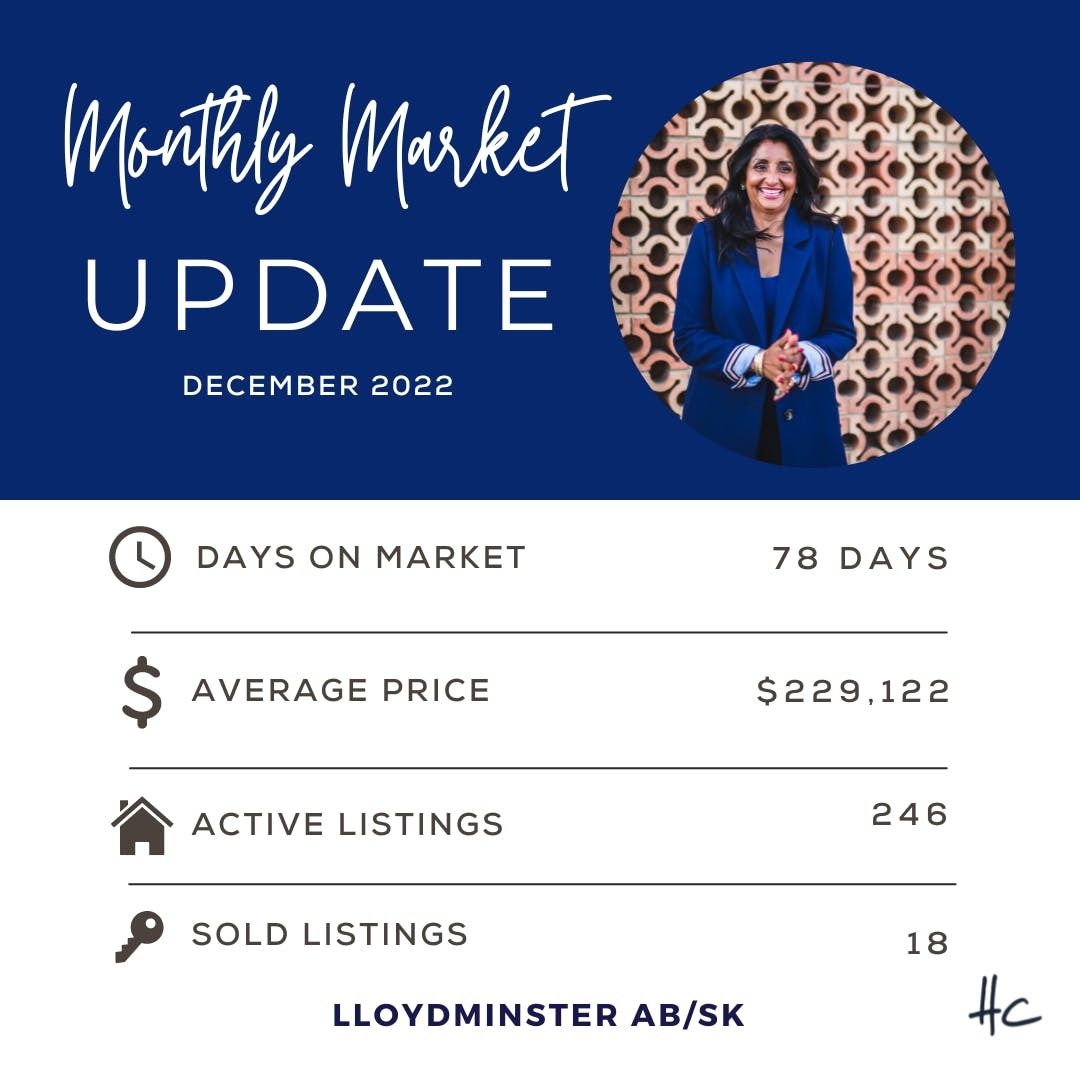
Welcome to my monthly real estate market update for Lloydminster. December was consistent for the time of the year. We had 18 properties sell. The average selling price range was $229,122, with an average of 78 days on the market. The most elevated home sold in December was around $828,125, with an average of 239 days on the market. The lowest price sold was $59,900, taking only 2 days on the market until SOLD.

To know more about your home worth, reach out and let’s connect.

Read

How to Reduce Your Interest Rate

If you’re currently in the market for a new home, you’re likely keeping a very close eye on interest rates. Interest rates are on the rise, which can impact how much you pay on your monthly mortgage payment. 

Today, I’ll share one way you can reduce your interest rate. Not many people know about interest rate buydowns, but they’re something you should be aware of as a buyer in our current market. 

An interest rate buydown is a way for a buyer to get a lower interest rate on their mortgage by paying for discount points during the closing process. Discount points are also known as mortgage points or prepaid interest points–it depends on which term your lender uses. 

To purchase discount points, a one-time fee is paid upfront, and the discount points will lower the interest rate for the term of the loan. As a result, the borrower pays less in interest with their monthly mortgage payment, making the home more affordable for the buyer. 

In most cases, the discount points are paid for by the seller. In a slower real estate market where homes are staying on the market for longer or are being reduced in price, the buyer can ask a seller to buy down their mortgage through discount points as an incentive to buy the home. 

As a buyer, interest rate buydowns are something you should keep in mind when negotiating, especially if you’re buying in a slower market where there isn’t much competition. 

Buydowns are also something to consider as a seller as it can be a selling point for potential buyers. If your home isn’t the hottest on the market, offering a buydown as an incentive can be a smart move. 

Interest rate buydowns and discount points are a unique tool that can be used to make a buyer’s monthly mortgage payment more affordable, which is useful to know whether you’re a buyer or a seller! 

Want to learn more about interest rate buydowns and other ways you can decrease your interest rate in this market? Feel free to contact me and can direct you to an amazing Mortgage Specialist.

Subscribe to my newsletter

Read

Can a Buyer and a Seller Have the Same Real Estate Agent?

Have you ever heard of the buyer of a home and the seller of the same home having the same real estate agent at the same time? This doesn’t happen often, and for good reason. In fact, I highly recommend staying away from this situation. 

When a real estate agent represents both the buyer and the seller for the same transaction, they’re called a dual agent. In some locations, dual agents are actually illegal, while in other areas, there aren’t any laws against them, but dual agents are frowned upon by the real estate community. 

This is because a dual agent cannot truly do their job. A real estate agent is supposed to fight for their client’s best interest and offer the best guidance and advice possible. But a seller and a buyer have opposite interests when it comes to purchase agreements and negotiations. The seller wants to get their house sold for the most money possible while the buyer wants to buy it for the least amount possible. 

But if an agent represents both the buyer and the seller for the same transaction, they cannot represent the best interest of the buyer and the seller at the same time. That means that in a dual agent situation, someone loses. A dual agent presents a clear conflict of interest. The agent can’t offer either party advice or guidance without breaking their promise to the other party.

When you hire a real estate agent, you expect to get full access to their knowledge, experience, and advice. But in a dual agent situation, you won’t be getting what you hired the agent for in the first place. My recommendation is to avoid this situation from the start. When you go to get your home ready to sell, find an agent who can guide you through the selling process. When you decide you want to buy or build a home, get an agent who can walk you through each step of the buying process and offer you the advice you need. 

Are you looking for an agent to represent you and give you the advice you need to make the best real estate decisions for your future? I’m currently accepting new clients, so feel free to reach out if you’d like to talk.

Subscribe to my newsletter

Read

HOW YOU CAN CANCEL YOUR PMI

Private mortgage insurance–or PMI for short–is one of those things that allows you to do something amazing like buy a house. But, at the same time, you don’t want to keep it around for any longer than you have to. 

If you’re currently paying PMI, you might be wondering how you can get rid of it more quickly. Canceling your PMI will allow you to put that money into your actual mortgage payment, rather than sending it to an insurance company each month. 

Lenders are required by law to automatically cancel your PMI after you’ve paid off 22% of the property’s original value.

I have some good news though: you might be able to cancel your PMI earlier than scheduled due to rising real estate values.

If you’re paying PMI right now, it’s pretty likely that you’ve bought your home in the past few years. We’ve seen some huge jumps in home values, which have likely increased your equity. 

In most cases, you need to have 20% equity in your home to cancel your PMI. If your home’s value has increased and boosted the equity you have in your home to 20% or more, you can get a new appraisal to show the increased property value. Then, you can take that appraisal to your lender to show that you now have 20% equity in your home and get your PMI canceled. 

Some lenders will require that you use their appraiser while others are more lax on who you use. You will need to pay an appraisal fee for this service, which can run $300-400. As such, you’ll want to make sure that the cost of the appraisal fee is less than the PMI you would pay. 

You will also need to ensure that your lender will accept a new appraisal on your home, because not all of them will. If your lender doesn’t accept new appraisals, don’t fret! Just continue to pay into your mortgage and request PMI cancellation when your mortgage’s principal is 80% of the property’s original value. 

PMI is helpful, but you don’t want it to hang around any longer than you need it to! If you have any questions about PMI, mortgages, refinances or anything else real estate, feel free to reach out, and I would be happy to chat.

Subscribe to my newsletter

Read

Increase Your Home’s Value with Home Improvements

As a homeowner, getting a high return on investment (or ROI) on the upgrades you do to your home is key to winning the real estate game when you sell. But some improvements can boost your home’s value more than others. These 5 home upgrades can seriously increase your home’s value, attract value, and return the money you spend on them when you sell your home. 

1. Add a home office. More people than ever are working from home, and it looks like remote and hybrid work situations are going to be standard in the future. Whether you convert a room in your home or build an office out, this is a high-ROI upgrade that will attract buyers.

2. Finish your basement. If your basement is unfinished, you have so much untapped potential (and profit!) at your fingertips. Finishing out your basement can increase your square footage, which is always a value-boost for buyers.

3. Open up your floor plan. Buyers love a nice open floor plan with good flow. You don’t have to take out all your walls either–just opening up the kitchen to the living room can go a long way to open up the flow of your home. 

4. Replace your garage door. Your garage door is constantly exposed to the elements, so it’s likely a little shabby. A new garage door is a selling point and will help your curb appeal.

5. Touch-up or redo your exterior paint. If your paint is looking a little worse for wear, touch it up to give it a fresh look. Or, to really boost your value, repaint your home in one of the year’s popular exterior paint colours to make your home look newer and more modern. 

Whether you’re planning to sell in the near future or way down the road, you can make improvements to your home that will attract buyers and help you make top dollar on your home. Want my professional opinion on what you can do to your Lloydminster home to boost your resale value? Let’s connect, and I would be happy to help.


Subscribe to my newsletter

Read

What Factors Determine Your Home’s Value?

Determining the value of a property is a complex process with a lot of moving parts. While it may seem like a quick online estimate will do the trick, getting a professional valuation done by a real estate agent will be much more accurate and give you a better understanding of your home’s worth on the market. Here’s a few of the things an agent will take into consideration when determining your home’s value. 

– The size of your home: Homes with more liveable square footage are worth more in general, so the larger your home, the more it will fetch on the market! That doesn’t mean that buyers aren’t looking for smaller houses though. Some buyers, like empty nesters looking to downsize, would love a smaller home, so it’s really just a matter of marketing your property to the right buyers to get the most ROI from your home. 

– The age and condition of your home: Home in great shape will score more on the market. Likewise, homes that require more fixes and maintenance from potential buyers will be worth less. The market loves move-in ready homes, so those properties can be priced at a premium!

– Updates and upgrades done to your home: Does your home have a beautifully done kitchen renovation or just really nice finishes throughout? Buyers love to see upgrades and updates, and so they add value to your home! 

– The performance of neighborhood comps: A good real estate agent won’t just look at the specifics of your home, they’ll look at how homes around you are doing on the market. They’ll look at the homes like yours in your area that have recently sold and are on the market. Then using the data they get from these comparable properties, AKA comps, they’ll be able to predict how much your home is worth on today’s market. 

From learning about these four factors that determine your home’s value, you can see that a simple online estimate likely won’t get you the most accurate value. If you’re really interested in seeing how much your home is worth, then get in touch with a real estate agent! 

Want to get my thoughts on your home’s value and what you can do to increase it in Lloydminster & area? Send me a message and I’ll walk you through the next steps. 

Subscribe to my newsletter

Read

5 TIPS FOR EVERY HOMEBUYER

When you know these five things, you’ll be set up for success in your home buying journey! There are some! foundational things you need to know as a homebuyer to make sure you play the real estate game right and get the best house for you. Here are five things every homebuyer needs to know:

1. Find the right neighborhood. The house is important, yes. But the neighborhood and area you live in can have a huge impact on the quality of your life. As a real estate agent, I highly recommend that you find the right neighborhood for your lifestyle and then find a house within that area. Not only will you make it easier to search for homes, but you’re more likely to be happy with your new house!

2. Send the right first offer. First impressions count when it comes to sellers, so make sure that your first offer is a good one! In this market where there are many potential buyers, it’s common for sellers to get multiple offers, and only send a counter offer to a few. Plus, sellers are people, so if you send in a low offer or one with many demands, they may get offended and refuse to consider other offers from you. Your agent will help you craft a first offer that will catch the seller’s attention and get them to engage with you. 

3. Get an inspection. If you want to make sure you get a good deal on your property and get the most out of your home, a home inspection is definitely in order. A home inspection will ensure that you know exactly what you’re getting into and give you the upper hand in negotiations if any problems with the property are found. 

4. Don’t forget closing costs. You know that you need to put down a down payment when you buy a house, and you probably have a nice little nest egg saved up for that. But did you know that you’ll also need to save up for closing costs? Closing costs are the costs necessary to close the deal–think the inspection, appraisal, title search, and mortgage lender fees. These costs typically range from 3-5% of the purchase price of the home, so it’s wise to save up for them in addition to your down payment. 

5. Rely on your agent! Your buyer’s agent will be by your side to guide you through every step of the way. They’re there to give you advice, provide support, and give you all the information you need to make the best choices for your future! 

If you follow these tips, you’re sure to have a successful home buying experience. Want more tips just for home buyers? Just reply to this email!

Subscribe to my newsletter

Read

You Don’t Need These Things to Buy a Home!

Today, we’re busting some home buying myths that can seriously mislead people. I see the myths floating around all the time, but they’re just not true! Let’s bust these myths so you don’t fall into their traps. 

Myth 1: You need a 20% down payment to buy a house. This is the classic homebuying myth–and it’s so wrong. While you do need to put money down to buy a house, there are many, many mortgage types out there that can decrease the amount you pay upfront. Some programs require as little as 3.5% down, which can make getting into a home so much easier.

Myth 2: You need perfect credit to own a home. Having excellent or good credit is helpful when qualifying for the best interest rate on a mortgage. But is it a requirement? Far from it! In fact, there are many loan programs out there to help buyers with less than perfect credit finance a home. You might be surprised at how low the credit requirement is for some of these programs. I’m happy to tell you more about them, so just send me an email if you want more information!

Myth 3: You need to do it all on your own. This myth is so wrong! When you’re a buyer, you have the opportunity to work with your choice of buyer’s agent, a real estate agent who will represent you as a buyer. Your agent will guide you through all of the ins and outs of buying a home, provide the advice and experience you need to make the best decisions, and be there to support you through the whole process. Plus, the seller typically pays the real estate agent’s commission, so you get all of that advice and guidance for free.

Buying a home can be complicated, it’s true. But now that you don’t believe these real estate myths anymore, you should feel much more confident and empowered to buy a home! A home is within your reach, and I would love to help you through the buying process. 

Have any questions about buying a home in Lloydminster & area? Feel free to contact me anytime.

Subscribe to my newsletter

Read

4 Benefits of Home Inspections

Remember last year when the housing market was red hot and bidding wars were all over the place? Many buyers were desperate to get their offer accepted on the home of their dreams, and they were willing to do whatever it took to get the sellers to notice them: even waiving the home inspection. 

To all the home buyers out there, we’re not doing that anymore. Home inspections are one of the most important parts of the real estate process because they can save you from making a bad decision that can impact the rest of your life. On top of simply being a smart choice, a home inspection will bring you several benefits like these. 

1. A home inspection can eliminate any surprises that may cause the home to fall out of escrow. If you find a serious problem with the property during the inspection, you’ll know ahead of the appraisal and will be able to work with the seller to come to a favorable outcome. 

2. A home inspection gives you the upper hand in negotiations. Again, if your home inspector alerts you to some problems with the property, you’ll be able to negotiate with the seller better. Your agent will guide you through this entire process and provide the advice you need to negotiate well.

3. A home inspection gives you an out. Let’s say the worst happens and your inspector finds some huge problem with the property that makes it a bad deal for you. With an inspection contingency in your purchase agreement, you’ll be able to get out of the deal rather than being stuck in a bad house. 

4. A home inspection helps you understand your investment and how to maintain it. You should always take the opportunity to attend the home inspection, because you’ll learn so much about the house from the inspector. They’ll show you things you never even knew to ask about, and as a result, you’ll be able to better take care of one of your biggest investments. 

Getting a home inspection has virtually no downsides—but comes with so many benefits. I highly recommend that buyers take full advantage of the opportunity to conduct an inspection. If you’re looking for some good inspectors in our area, just reply to this email and I’ll send you my recommendations.   Looking for a Home Inspector in Lloydminster & Area?  Let’s Connect.

Subscribe to my newsletter

Read

Your Questions Answered: Appraisal-Required Repairs

Appraisal-required repairs can sound a little intimidating for both buyers and sellers. But once you know what appraisal-required repairs are and why they exist, you’ll feel prepared for any appraisal!

First, let’s go over some definitions. During the closing process, lenders will require an appraisal before they process the buyer’s mortgage. This is required by the lender to ensure that they make a sound investment since they’re putting up the funds for the mortgage.

However, sometimes problems are found during the appraisal. If this happens, the lender will require that repairs are done before they give the green light on the mortgage. Appraisal-required repairs usually deal with the livability of a house and include the following repairs:

-Replacing lead-based paint and/or asbestos

-Repairing stairs in poor condition

-Repairing an old or damaged roof

-Replacing or repairing a damaged foundation

-Repairing mechanical systems

-Updating or repairing electrical, exposed wiring, and fuse boxes

Whether you’re the buyer or the seller, you want to avoid finding an appraisal-required repair. As a seller, you can get an inspection done before listing and make any updates to ensure the house goes through the appraisal process smoothly. Buyers can ensure that they include an appraisal contingency in the purchase agreement. 

If appraisal-required repairs are found, the buyer and the seller will come to an agreement concerning the repairs so that the buyer can obtain the mortgage to buy the home. If the parties can’t agree on the repairs, the lender won’t fund the mortgage, and the contract will fall through. 

Have any other questions about the closing process and things to watch out for? Feel free to contact me.

Subscribe to my newsletter

Harpreet Christie

RE/MAX of Lloydminster

(780)205-7653

BorderCityRealEstate.com

Read
Data is supplied by Pillar 9™ MLS® System. Pillar 9™ is the owner of the copyright in its MLS®System. Data is deemed reliable but is not guaranteed accurate by Pillar 9™.
The trademarks MLS®, Multiple Listing Service® and the associated logos are owned by The Canadian Real Estate Association (CREA) and identify the quality of services provided by real estate professionals who are members of CREA. Used under license.